 Faith, my faith is an island in the setting sun / But proof, yes, proof is the bottom line for everyone. — Paul Simon
To be clear: I have no dog in the fight over the attribution of “Napalm Girl” to either Nick Ut or Nguyen Thanh Nghe. Per my previous posts in this series, the preponderance of the evidence convinces me that, at the very least, a serious case can be made for Nghe’s claim to that honor — though I don’t think the VII Foundation’s film on that subject, The Stringer, makes that case effectively from a probative standpoint. However, should the Associated Press actually conduct the simple negative-comparison test I proposed in my preceding post, and it demonstrates without question that Nick Ut took that photo, the outcome won’t make me unhappy. I’m not invested in the who; I care about the how.
In general, it heartens me to watch any debate over matters photographic reach the general public and go viral, especially when it involves and requires close, careful attention to the specifics of one or more photographs. Whatever its strengths and weaknesses, the film about the controversy over the authorship of “Napalm Girl” has stimulated such a discussion, for which it deserves both praise and gratitude. My particular interest in it concerns the methodology of the inquiry and, more broadly, the spotlight it shines on the activity we might call the forensic investigation of photographs.
Proof, Yes, Proof …
Sifting through hard evidence has its own rewards and excitements, for those of a certain temperament, among whom I number. (Thomas Harris wrote, “Problem-solving is hunting. It is savage pleasure, and we are born to it.”) But observing that process from the outside is not inherently fun, and not automatically entertaining, especially when the search involves getting really granular, learning new terms and concepts, going over the same ground multiple times, and otherwise immersing yourself in often dry and technically complex material.
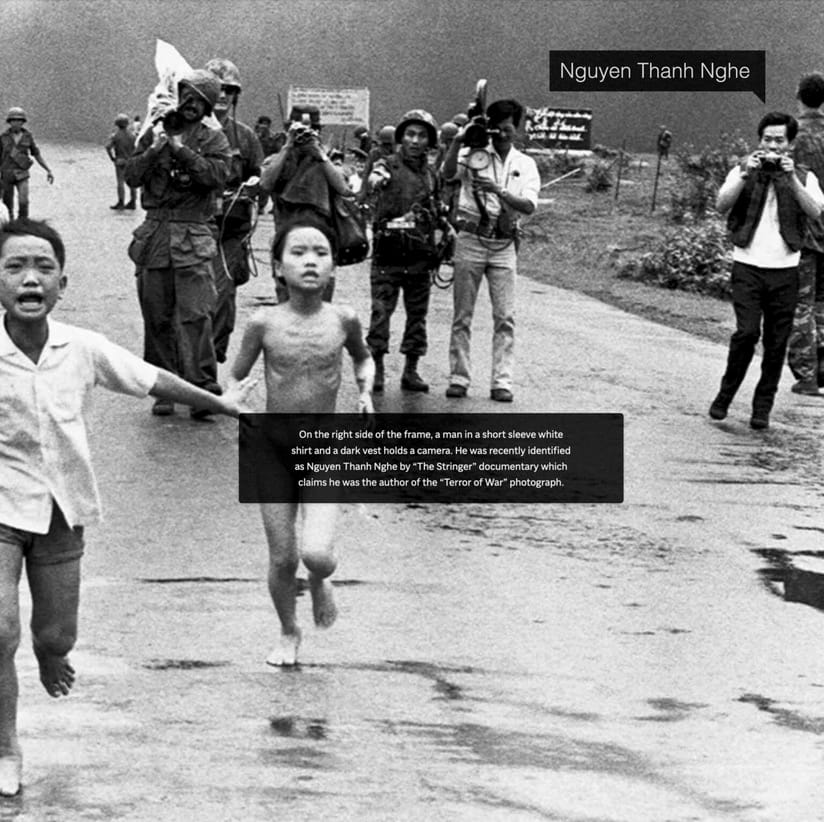
Nguyen Thanh Nghe (left) at Trang Bang 6-8-72, AP report 2025, screenshot
That’s why detective stories and judicial and police procedurals from the Chinese gong’an fiction of the Song dynasty (960-1279) through Sherlock Holmes and right up to today’s CSI and Special Victims Unit embed their actual detecting and procedural activity in “human interest” materials: personal and professional backstories, ongoing narrative threads, distinctive and even eccentric characters (Holmes, Columbo, Mr. Monk), single-episode dramas, etc. It’s the “spoonful of sugar helps the medicine go down” approach to forensic investigation, treating it as inherently unpleasant and requiring some mollifying sweetener to make it palatable.
With that said, YouTube offers voluminous proof that for any and every forensic search, no matter how oddball, arcane, or seemingly of limited interest, there’s an audience that doesn’t require important search targets (or even targets that matter much), or presentations with style, or presenters with charisma. Forget hunters of Sasquatch, UFOs, and ghosts; there are metal detectorists looking for old coins, amateur paleontologists, people who walk the mud flats of the Thames scouting for bits of discarded London history, skilled thrifters and yard-salers who specialize in this or that brand of crockery or baseball cards, metal recyclers, dumpster divers, and countless other varieties of hunter-gatherers searching for the grails of their offbeat areas of expertise. I watch some of these from time to time, to remind myself that I have plenty of company.
•
The first forensic investigation of a photograph of which I became aware (albeit dimly, as I was a mere tad at the time) involved the doctored photograph showing Private G. David Schine and Army Secretary Robert T. Stevens that featured in the televised 1954 Army-McCarthy hearings. For reasons having to do with personal history — I was a “red-diaper baby” — my family tracked those proceedings closely, so at the age of ten they were on my radar screen, however precociously.
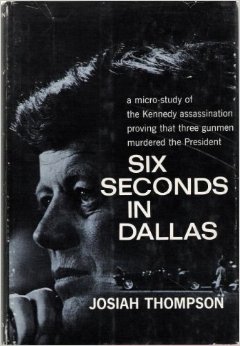
Josiah Thompson, Six Seconds in Dallas (1967), cover.
The first forensic investigation of photographs that I became aware of and wrote about, back in 1968, was devoted to the JFK assassination. (See “JFK, Tink Thompson, and ‘Six Seconds in Dallas.'”) Just months before I hung out my shingle as a photography critic, I interviewed Rilke scholar Josiah “Tink” Thompson, who’d published a book studying closely the Zapruder film and still photos of the murder of Pres. John F. Kennedy, for a Village Voice profile.
Though it evolved over time, and wasn’t particularly visible in my early critical writings, close, careful attention to the specifics of photographs — both the details of their imagery and the physicality of their nature as objects and artifacts — gradually became the bedrock of my approach to photo criticism, the core of my hermeneutics. Inevitably, this converged with my interest as a cultural journalist in high-profile public situations that brought attention to photography and photographs.
Criminal cases aside, inquiries into the authenticity of photographs, their authorship, and/or the credibility of the stories behind them have been relatively scarce over the past six decades. Serious forensic investigations of photographs have been surprisingly few and far between. Errol Morris’s exposé of Roger Fenton’s staged 1855 “Valley of Shadow of Death.” William A. Fassanito’s revelation that Alexander Gardner and his assistant Timothy O’Sullivan actually staged “Home of a Rebel Sharpshooter” and other Gettysburg photos in 1863. Stephen Perloff’s unmasking of photographer Walter Rosenblum’s forged Lewis Hine “vintage” prints in The Photo Review. The forged “Bokelberg prints” of Man Ray photographs. David King’s 1997 book The Commissar Vanishes: The Falsification of Photographs and Art in Stalin’s Russia. The fatally flawed investigation of a supposedly staged Walker Evans photo by James Curtis and Errol Morris. (You’ll find Andrew Molitor’s debunking of their effort here at this blog.) J. M. Susperregui’s definitive analysis of the staging of Robert Capa’s “Falling Soldier.” All of these and more have come to light during the decades of my professional life as a photo critic and historian. But that’s not a lot.
•
Though it takes as its jumping-off point a painting and not a photograph, along the way Josephine Tey’s The Daughter of Time became a touchstone for me as exemplifying forensic investigation of a visual image and its related narrative(s). Tey’s protagonist, Scotland Yard Inspector Alan Grant, has an unorthodox approach to historiography, viewing the writing of history from a skeptical detective’s perspective on motive and first-person testimony and hearsay, and emphasizing an overriding concern with dates, places, names, facts, and other verifiable details.
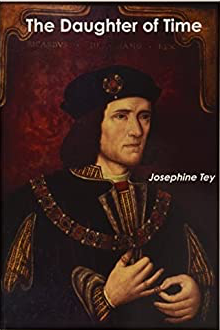
Josephine Tey, The Daughter of Time (1951), cover
Inspector Grant uses aspects of standard police procedure to figure out who most likely killed those princes in the Tower of London. (Hint: It wasn’t Richard III.) To solve this historical mystery in a forensically satisfying way he must create his own methodology, because the discipline of historiography offers none. Similarly, photo historianship, itself a relatively new discipline, provides no established protocols and methodologies for the forensic analysis of photographs.
In all the instances listed above, the investigators had no training in the forensic analysis of photographs for those purposes. They had no handbook or other source of guidelines to follow, because none existed — as is still the case. Mostly they reasoned it out as they went along. Sometimes an omission or error is glaringly obvious, but there’s always the possibility that, without a checklist to remind them, they just didn’t think of x or y. Situations differ, and we don’t yet have enough of them on record for patterns to emerge and systems for addressing them to evolve.
… Proof is the Bottom Line for Everyone
Though clearly not intended as such, the combination of The Stringer, the AP report, and the WPP report, taken as a team effort to establish and verify the authorship of “Napalm Girl,” reflects the necessarily improvised, bespoke aspect of their collective inquiry. They fall into two of three potential categories. The Stringer relies almost exclusively on first-person/eyewitness testimonies, eschewing close attention to documentation and physical evidence. The AP report and the WPP report combine close attention to personal narratives with the weighing of physical evidence. Only the private report to which I’ve referred, unavailable for publication due to copyright restrictions, prioritizes the physical evidence while largely disregarding the testimonies.
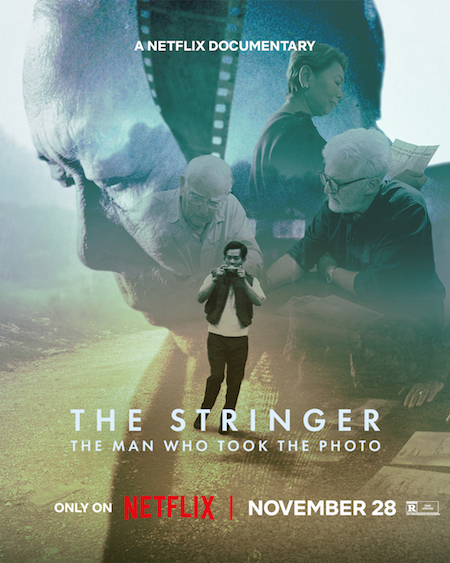
VII Foundation, The Stringer (2025), release promo, screenshot
To the best of my knowledge, our project, “Alternate History: Robert Capa on D-Day,” holds the record for the longest-running forensic investigation of a set of photographs, having just celebrated its twelfth anniversary. The VII Foundation’s work on The Stringer, even with the two extensive reports it provoked, hasn’t lasted nearly as long, of course, but when it comes to substantive content and an evidence-based methodology we definitely have a counterpart. While the AP report doesn’t refer to our Capa D-Day project — and I have no reason to expect it would or should — I like to think that our work since 2014 lurks behind this, as a model of forensic inquiry into a set of photographs. At the very least, it’s available for comparison, as a benchmark.
Beyond the commitment to getting at the truth underlying a certain photograph or set of photographs, the “Napalm Girl” project shares with ours an implicit belief that solving their respective puzzles requires a team effort. Which means acknowledging the presence of issues that are above any single individual’s pay grade. As Dirty Harry says, “Man’s got to know his limitations.”
•
I do realize that the very concept of truth nowadays gets treated as a mere “notion,” and that it’s fragile and perishable at best. I tend to agree with Karl Popper’s formulation: We never actually get to truth, but we can aspire to ever higher and more sophisticated levels of error.
Even so, the very idea of filing a lawsuit objecting to inaccurate representation of something or someone in a work of graphic art — painting, drawing, etching, engraving — is risible. Only photographs and other forms of lens-derived media (films, videos) are subject to such legal attack. This indicates clearly that, even today, we believe we can know something from a photograph that we can’t find in any other form of visual depiction. Even the most trivial of photos encodes data and carries meaning and signification that no other system of depiction can achieve.
In short, photographs carry an implicit documentary value and evidentiary function that lens culture everywhere certifies. Which is why what the VII Foundation, the Associated Press, and World Press Photo have achieved in their collective efforts on the making of “Napalm Girl” matters, deeply, regardless of their flaws.
•
With all that said, I gladly offer this blog series as a platform for anyone with something substantial to contribute. These posts are open to response in the Comment box, following my standard guidelines (real names, authenticated email addresses, etc.). If individual comments run long, they might turn into Guest Posts.
In short, happy to make online space available and do the editorial/publication grunt work for anyone who wants to bring their knowledge and experience to bear on this situation. Many platforms have already provided space for advocates of Ut and Nghe to square off in defense of their heroes, so I encourage readers so inclined to take their partisanship elsewhere. I aim my offer at those interested not in fandom but in proof. Because, as Paul Simon sings, “proof, yes, proof is the bottom line for everyone.”
•
This post sponsored by a donation from Carlyle T.
•
Special offer: If you want me to either continue pursuing a particular subject or give you a break and (for one post) write on a topic — my choice — other than the current main story, make a donation of $50 via the PayPal widget below, indicating your preference in a note accompanying your donation. I’ll credit you as that new post’s sponsor, and link to a website of your choosing.
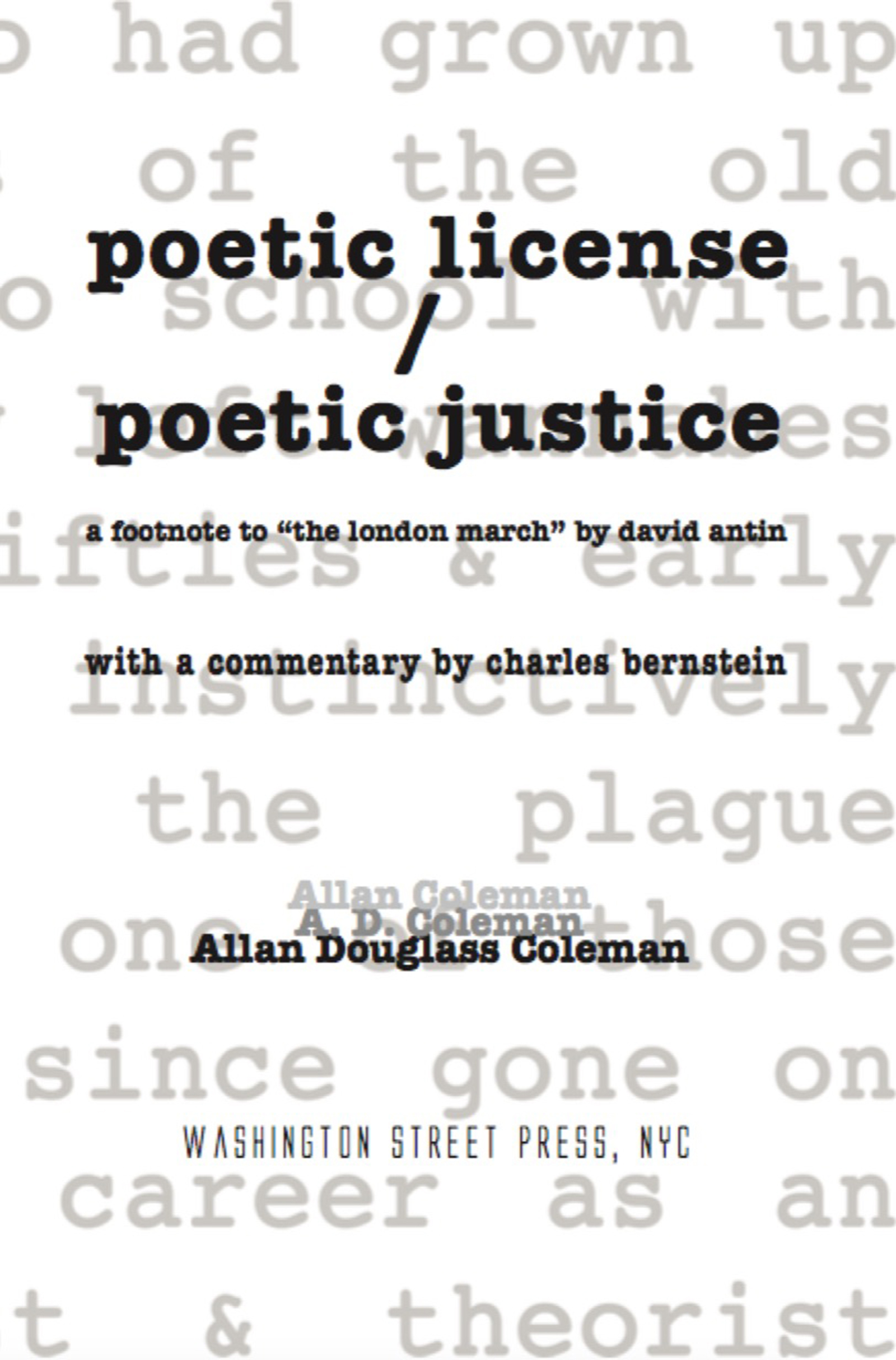
And, as a bonus, I’ll send you a signed copy of my new book, poetic license / poetic justice — published under my full name, Allan Douglass Coleman, which I use for my creative writing.

Thank you very much Allan.