
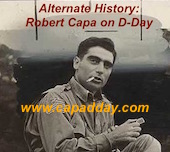
The myth of Robert Capa’s D-Day, as publicly initiated by Capa himself, constitutes a classic example of the form of fraud referred to disdainfully by those in the military as “stolen valor.” […]
|
|
All members of the Capa Consortium — ICP, Magnum, Time, Inc., John Morris — face the 75th anniversary of D-Day, coming up in June 2019, on which occasion Capa’s D-Day photos and the contextualizing tale thereof will once again have a central role — whether in its original and now discredited mythic form or in an updated, realistic, credible, fact-based version. […] Researchers should not have to jump through hoops, devious devious tactics, or resort to threats of adverse publicity in order to gain access to archival materials. That smacks more of some government agency requiring detailed, exact FOIA requests than it does of a responsible repository ostensibly welcoming scholars. […] [Note, March 14, 2016: This post, originally published on March 13, contains the first serious error made in the course of this investigation to date: I mistook footage of the battle of Dieppe, August 19, 1942, for footage of D-Day almost two years later. Carelessness on my part, for which I offer no excuse, only […] From the evidence we can draw a clear conclusion: Partners in the Capa Consortium, including Magnum’s members and its administrators, do not scruple to contaminate the record with misinformation, outright lies, falsified “evidence,” and whatever fanciful elaborations they feel like making up concerning Robert Capa’s D-Day experiences and the subsequent fate of his negatives. […] |
 SPJ Research Award 2014 SPJ Research Award 2014 |